Introduction
Surveying receivers, robots, and in-vehicle terminals now bring together more wireless functions. GNSS often works alongside cellular, Wi-Fi, and Bluetooth systems in these devices. This combination can create radio frequency (RF) coexistence challenges. In some operating conditions, nearby wireless transmissions or noise from internal electronics may affect GNSS reception. Antenna placement, RF and circuit design, and testing with wireless functions running together all play a part in reducing those effects.
Why Wireless Signals Can Interfere with GNSS
GNSS signals travel from satellites to Earth and are very weak when they reach a receiver antenna. A stronger wireless signal generated in or near a device may affect reception if it couples into the GNSS receive path.
Cellular, Wi-Fi, and Bluetooth transmissions do not always interfere with GNSS. In certain frequency and operating conditions, unwanted out-of-band emissions or harmonics may enter the receive path. A strong signal outside a GNSS frequency band may also overload parts of the receiver front end, making weak satellite signals harder to detect. This is known as receiver desensitization.
Interference may also come from inside a device. Noise from power supplies, clocks, processors, and other electronics can couple into an antenna or RF circuitry. Its effect depends on operating frequencies, transmission activity, antenna isolation, and receiver front-end design.
How to Reduce GNSS Interference
Reducing potential interference calls for attention to antenna placement, RF design, internal noise, and device performance during simultaneous wireless operation.
- Plan antenna placement and isolation. Consider spacing, orientation, and surrounding structures when positioning GNSS and other wireless antennas. Check the final arrangement in an assembled device to assess how wireless modules affect one another.
- Use appropriate pre-filtering and LNA design to suppress out-of-band interference. Pre-filtering can attenuate unwanted out-of-band signals before a low-noise amplifier (LNA) amplifies them. Filter and LNA configuration should match receiver frequencies and RF design requirements.
- Improve PCB layout, grounding, and shielding to reduce internal electronic noise. These measures can limit noise coupling from power supplies, high-speed digital circuits, and other electronics into GNSS antenna connections or RF circuitry. Their effectiveness should be checked in a complete device.
- Test GNSS reception while wireless modules operate simultaneously. Keep GNSS running and compare reception under consistent conditions with other wireless modules off, running separately, and running together. Choose evaluation metrics that suit the device’s intended use.
Harxon GNSS Antenna Solutions
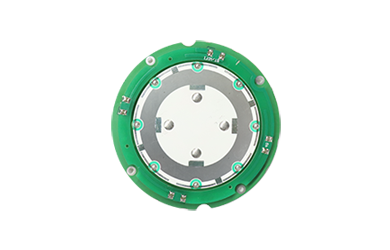
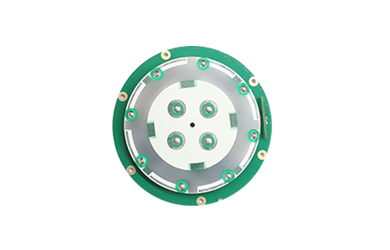
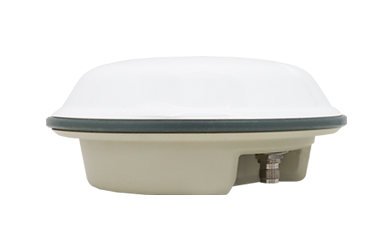
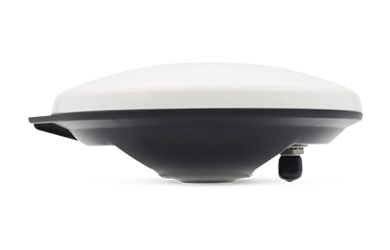
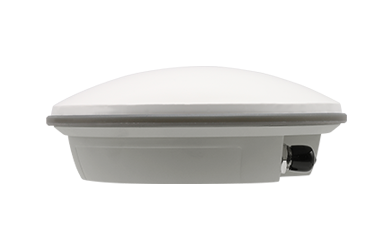
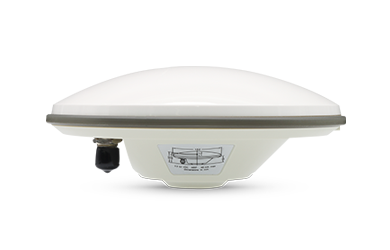
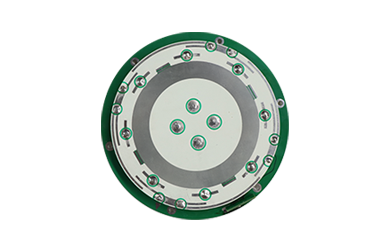
Harxon offers OEM GNSS antennas for RTK receivers, surveying equipment, robots, and precision agriculture devices. These models combine GNSS with different communication antennas and come in different sizes
| Model | Integrated communication antennas | Dimensions |
|---|---|---|
| HX-SE407A | 4G | Ø127.8 × 20.3 mm |
| HX-SE408A | Wi-Fi/Bluetooth | Ø95.7 × 13.3 mm |
| HX-SE409A | 4G | Ø111.0 × 19.8 mm |
| HX-SE410A | Dual 4G + Wi-Fi | Ø127.8 × 20.3 mm |
| HX-CSX137A | Dual 4G + Wi-Fi/Bluetooth | Ø111 × 23.8 mm |
| HX-CSX100A | Dual 4G + Wi-Fi/Bluetooth | Ø125 × 27.5 mm |
When choosing an antenna, consider the GNSS signals and communication functions required by the device, along with available space, connectors, and RF design.
Conclusion
Wireless transmissions and internal electronic noise may affect GNSS reception when several systems operate in one device. Antenna and RF integration influence how well those systems work together. Testing with relevant wireless modules running at the same time helps assess GNSS reception in intended operating conditions.
CTA
Explore Harxon OEM GNSS antennas or contact our team to discuss GNSS and wireless antenna integration for your device.
FAQ
Does Wi-Fi or Bluetooth always interfere with GNSS?
No. Interference depends on factors such as operating frequencies, antenna isolation, and RF design.
Is more distance between antennas enough to prevent interference?
Not necessarily. Antenna orientation, surrounding structures, and RF design also affect isolation.
Why test GNSS while wireless modules run together?
Simultaneous operation may reveal reception issues that do not appear when modules run separately.