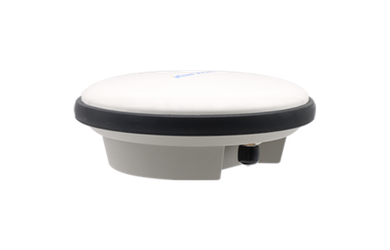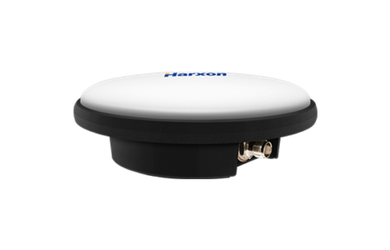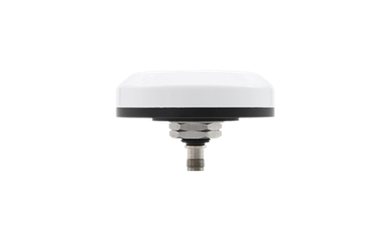
Construction and mining machines operate in environments that place heavy demands on GNSS positioning. Excavation, grading, hauling, drilling, and material handling take place around steel structures, rock walls, heavy equipment, dust, water, and continuous machine movement. In these conditions, the GNSS antenna is a critical part of the positioning chain, delivering satellite signals to the receiver and machine-control system. Explore Harxon Construction and Machine Control solutions for the wider application context.
For OEMs and system integrators, the right GNSS antenna combines reliable signal tracking with the environmental protection, mounting flexibility, and integration fit required by the machine and the jobsite.
GNSS and RTK in Construction and Mining Equipment
GNSS is used across construction and mining workflows to establish where a machine is, where its working tool is relative to a digital design, and how the machine is moving through the site. An excavator can use position information as one input to grade-control guidance. A dozer or motor grader can use it to compare blade work against a design surface. Haul trucks and other mobile assets can use it for fleet location and route-awareness workflows. In more integrated systems, GNSS observations may also contribute to automated or semi-automated functions.
RTK is commonly part of the high-precision positioning architecture for these applications. It uses carrier-phase observations together with correction data from a local base or supported network service. Positioning accuracy and availability depend on the complete system, including the receiver, correction source, antenna installation, coordinate framework, machine geometry, and control software.
That distinction matters on heavy equipment. Signal blockage, reflections, electrical noise, loose connections, and changing installation geometry can all affect the observations available to the receiver. A suitable antenna helps maintain stable GNSS observations as the machine moves and the surrounding environment changes.
From Machine Guidance to Automated Workflows
Machine guidance combines the antenna, receiver, correction source, machine sensors, design data, and control software. The antenna receives satellite signals; the receiver tracks and evaluates them, applies available corrections, and produces position and, where the design supports it, orientation information. The machine application combines that output with machine sensors, design data, and its own operating logic.
What Harsh Jobsite Conditions Demand from a GNSS Antenna

Construction and mining sites combine mechanical exposure with difficult signal environments. A machine may experience continuous vibration from travel, cutting, drilling, loading, or compaction, followed by discrete shocks from rough ground or tool contact. Dust, rain, splash, heat, cold, and sunlight add environmental stress. Cable exits, connectors, mounting hardware, and the enclosure all need to be considered alongside RF performance.
The signal environment can be just as important. Buildings, cranes, metal structures, mine walls, parked equipment, and the machine itself can reduce sky visibility or reflect satellite signals. Blockage reduces the number or geometry of usable satellites. Multipath occurs when delayed reflected signals arrive alongside the direct signal. Both effects can make a high-precision solution less stable, but they are different problems and should not be treated as interchangeable.
Mechanical and Environmental Survivability
For a machine-mounted antenna, key selection factors include expected vibration and shock, mounting method, cable routing, connector retention, and enclosure protection. Choosing a model with the right environmental rating helps protect the antenna from dust, rain, splash, temperature changes, and long-term outdoor exposure.
The mounting interface deserves the same attention as the antenna housing. A mechanically secure installation helps preserve antenna position and reduces the risk of cable abrasion or intermittent connection. The mount, cable exit, and connector arrangement should fit the machine structure and expected jobsite loads.
Signal Visibility, Reflections, and Multipath
An unobstructed sky view remains valuable, but it is rarely the only consideration on a working machine. The antenna location should be reviewed against nearby cab structures, booms, counterweights, radio equipment, and other reflective or obstructing components. The surrounding geometry can change as the machine turns, raises an attachment, or works beside a wall or mine face.
Address multipath through installation, antenna design, and receiver processing. Site and antenna placement can reduce avoidable reflections. Antenna design can improve the quality of received observations and reduce sensitivity to reflected signals, while receiver processing evaluates observation quality after reception. No single measure eliminates multipath in every jobsite condition. For a deeper explanation of the antenna-side principle, see hardware-level multipath mitigation.
In a mine pit or beside dense infrastructure, direct satellite visibility can be limited at certain working positions. Combining a suitable antenna installation with receiver-level quality monitoring and the wider machine-positioning architecture helps the system respond appropriately as conditions change.
Positioning Quality Is a System Outcome
High-precision GNSS requires compatible antenna and receiver support for the required constellations and frequencies, stable phase behavior, suitable gain and polarization, and a sound RF connection. Correction design, receiver capability, installation geometry, and testing during realistic movement also affect the result.
A practical GNSS antenna specification covers the work task, sky view, shock and vibration, environmental exposure, mounting space, cable and connector requirements, receiver interface, correction method, and operating conditions. This gives OEMs and integrators a clear basis for selecting the right solution for each machine platform.
| Jobsite risk | Effect on GNSS observations | Antenna requirement to check | System or installation check |
|---|---|---|---|
| Continuous vibration and shock | Mount or RF connection can become unstable | Model-specific vibration and shock conditions; housing and mount | Machine load profile, fastener retention, cable strain relief |
| Dust, rain, splash, and temperature change | Environmental exposure can affect long-term operation | Model-specific ingress protection and operating-temperature range | Location, cable exit, service access, and cleaning exposure |
| Buildings, mine walls, and machine structures | Satellite blockage and changing sky view | Constellation/frequency support and low-elevation tracking capability | Antenna location through representative machine poses |
| Metal surfaces and large equipment | Reflected signals can increase multipath risk | Phase stability and documented multipath-rejection characteristics | Reflection survey and dynamic observation-quality test |
| Receiver, correction, and machine application choices | Final result may not match antenna-only expectations | Electrical interface, connector, and supported signal coverage | End-to-end RTK, latency, geometry, and degraded-mode validation |
Harxon Ruggedized GNSS Antenna Solutions for Heavy Equipment
Harxon Ruggedized Antennas are built for high shock, continuous vibration, and harsh outdoor exposure. Designed for construction, agriculture, marine, and other demanding applications, they combine robust mechanical protection with high-precision GNSS signal tracking. For heavy equipment, select the antenna around the installation layout, environmental exposure, receiver design, and positioning requirements.
HX-CVX606A for Ruggedized Machine-Mounted GNSS
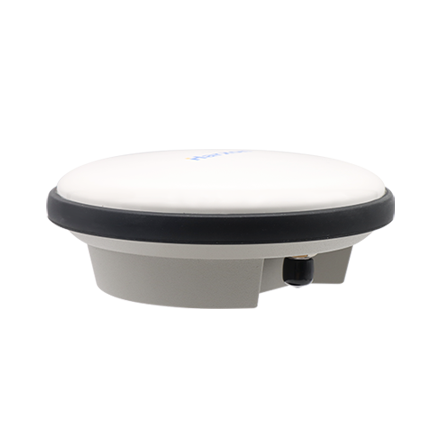
The HX-CVX606A ruggedized GNSS antenna is designed for reliable, high-precision positioning in high-shock and high-vibration environments. It is well suited to construction machinery, including bulldozers, pile drivers, excavators, pavers, and road rollers, as well as other machine-mounted GNSS applications that operate under tough outdoor conditions.
Its aerodynamic ruggedized enclosure and solid metal base provide IP67 and IP69K protection against dust, rain, and harsh weather. With vibration resistance of 9.8 gRMS from 24 to 2000 Hz and shock resistance of 75 G for 6 ms across three axes, HX-CVX606A is engineered for the mechanical demands of heavy equipment.
Full-band, multi-constellation coverage supports GPS, GLONASS, Galileo, BeiDou, QZSS, IRNSS, SBAS, and L-Band correction services. Stable phase-center variation, excellent multipath rejection, and strong low-elevation satellite tracking help deliver reliable GNSS observations when machines operate around partial sky blockage and reflective surfaces.
HX-CGX611A for Reference-Station and Multipath-Sensitive Applications
For base stations, reference stations, CORS networks, and other high-precision applications, the HX-CGX611A mini choke-ring antenna provides full-band GNSS coverage in a compact choke-ring design. Its choke-ring structure supports multipath suppression and phase-center stability, while the IP67 housing provides protection against dust, rain, splash, and sunlight.
HX-CGX611A is a strong choice where reference-station performance, high-precision observation quality, and multipath mitigation are priorities. HX-CVX606A is the more suitable choice for machine-mounted applications that place particular emphasis on high shock and continuous vibration resistance.
Plan the Installation Around Real Operating Conditions
Start with the intended antenna location, nearby reflective surfaces, sky-view limitations, expected mechanical loads, environmental exposure, cable and connector routing, receiver design, and correction method. Test the complete installation under representative operating conditions before finalizing the production design.
Choose the Antenna Around the Machine, the Sky View, and the Positioning Architecture
Construction and mining machinery needs GNSS antennas that match both the physical platform and the signal environment. By considering machine loads, mounting position, environmental protection, GNSS coverage, phase stability, multipath performance, and the receiver/correction configuration together, OEMs and integrators can improve positioning reliability in demanding operations.
For rugged machine-mounted GNSS, HX-CVX606A brings together high shock and vibration resistance, IP67/IP69K protection, and full-band GNSS tracking for construction machinery. For reference-station and high-precision observation applications, HX-CGX611A offers the multipath mitigation and phase-center stability of a mini choke-ring design.
Contact Harxon to discuss a ruggedized GNSS antenna for your machine platform and installation requirements.