Choosing an OEM GNSS antenna is not simply a matter of selecting the widest frequency range or the highest gain. The antenna must work as part of the complete GNSS receiver system. Its signal coverage, RF performance, mechanical design and integration environment all affect positioning results.
This guide explains how to select an OEM GNSS antenna in five practical steps, from receiver specifications to final product validation.
1. Match the Receiver’s GNSS Capability
Start with the signals your GNSS receiver can actually process.
Check whether the receiver supports GPS, GLONASS, BeiDou, Galileo, QZSS, SBAS or L-Band correction services. Then confirm the required frequency bands, such as L1, L2 and L5. The antenna should cover the receiver’s current signal requirements and, where possible, its future product roadmap.
For example, a receiver designed only for single-frequency positioning does not necessarily need a full-band antenna. A dual-band antenna may provide a more practical balance between performance, size and cost. However, an RTK receiver using L1/L2/L5 signals requires a multiband or full-band antenna to avoid limiting the receiver’s capability.
Also confirm whether the receiver requires an active or passive antenna. An active antenna includes an LNA and requires a compatible power supply, voltage range and current budget. These electrical requirements must be checked before selecting a model.
2. Match the Receiver’s Target Positioning Performance
The antenna should be selected according to the required positioning result, not only the receiver’s signal list.
For high-precision and RTK applications, pay close attention to:
- Phase center stability and phase center variation
- Multipath suppression
- Gain pattern
- Low-elevation satellite tracking
- Polarization performance
- LNA gain and noise figure
- Group delay and signal consistency
Phase center stability is especially important in surveying, machine control and other applications where repeatable measurements are required. Multipath suppression helps reduce errors caused by reflected signals from buildings, vehicles, metal structures and the ground.
Peak gain is useful, but it should not be used as the only selection criterion. A higher peak gain does not automatically mean better positioning. The antenna must maintain a stable radiation pattern across the required frequency range and elevation angles.
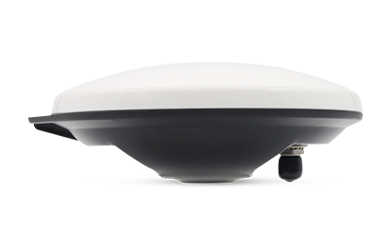
For reference, the Harxon HX-SE401A provides a phase center error of ±2 mm, a peak gain of 4.0 dBi and an LNA noise figure of ≤2 dB. These specifications are more useful for high-precision integration than a gain figure alone.
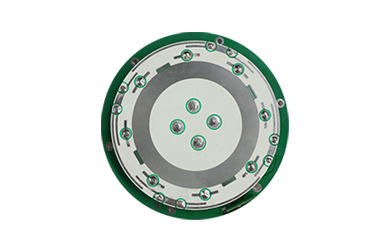
HX-SE401A High Precision OEM GNSS Antenna
3. Choose the Right OEM GNSS Antenna Architecture
The receiver’s overall function determines whether you need a GNSS-only antenna, a combination antenna or an integrated RTK solution.
| Receiver architecture | Recommended antenna solution | Suitable Harxon solution |
|---|---|---|
| GNSS-only receiver | Full-band or dual-band OEM GNSS antenna | HX-SE401A, HX-CSX231A |
| GNSS + cellular | GNSS + 4G/5G combination antenna | HX-CSX137A, HX-CSX100A |
| GNSS + Wi-Fi/Bluetooth | GNSS + Wi-Fi/Bluetooth combination antenna | HX-CSX137A, HX-CSX100A |
| RTK receiver + data link | GNSS + radio antenna | HX-SE403A, HX-SE402A |
| Reduced RTK integration workload | GNSS antenna + integrated RTK module | HX-ME401A, HX-ME403A |
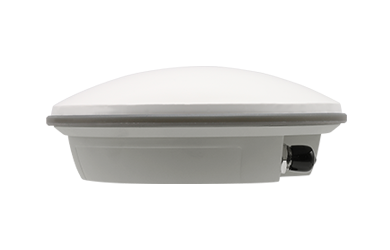
For compact robots, UAVs and autonomous equipment, a small embedded antenna can simplify the mechanical design. The HX-CSX231A is available in a compact full-band configuration, with a 4.5 dBi GNSS peak gain and ±2 mm phase center error.
When the product needs both positioning and wireless data transmission, a combination antenna can reduce the number of independent antennas, cables and mounting locations. The HX-CSX137A integrates GNSS, dual 4G, Wi-Fi and Bluetooth functions in one compact enclosure.
For RTK systems that use a local radio link, the HX-SE403A combines a full-band GNSS antenna with a 902–928 MHz radio antenna. The radio band, module interface and local certification requirements should always be confirmed before production.
If the main goal is to reduce software, RF and mechanical integration work, a Smart Antenna with an integrated RTK module may be more efficient than developing the antenna and receiver separately.
4. Consider the Receiver’s Complete Integration Environment
An OEM GNSS antenna can perform differently after it is installed inside the final product.
Before approving a model, review the PCB layout, Ground Plane, Keep-out area, enclosure material and surrounding electronic components. Batteries, displays, heat sinks, metal brackets and high-speed digital circuits can all affect antenna tuning and signal quality.
The distance between the GNSS antenna and other RF modules also matters. 4G/5G, Wi-Fi, Bluetooth and radio transmitters may introduce desensitization or electromagnetic interference. A combination antenna can simplify the mechanical design, but it still requires RF coexistence testing.
Mechanical and electrical details should be confirmed at the same time:
- Antenna size and weight
- Mounting method
- Cable length and cable loss
- Connector type
- Supply voltage and current
- Operating temperature
- Vibration, shock and waterproofing requirements
The antenna should be evaluated inside the final enclosure rather than only on an open development board. If the surrounding structure changes the antenna response, custom tuning may be required. Harxon provides customization for antenna dimensions, frequency bands, gain, connectors, cables and system integration through its Product Customization service.
5. Validate the Complete Device and Confirm the Final Model
The final antenna model should be confirmed through production-like testing.
At minimum, record the following results:
- C/N0 and satellite tracking under open-sky conditions.
- Time to first fix and RTK fix time.
- RTK fix stability during static and dynamic operation.
- Position repeatability and accuracy.
- Low-elevation and multipath performance.
- GNSS performance while 4G, Wi-Fi, Bluetooth or radio is transmitting.
- Temperature, vibration and long-term operating performance.
- Performance inside the final PCB and enclosure.
Use the same test conditions when comparing different antennas. Record receiver firmware, correction source, cable length, antenna position, environmental conditions and test duration. This creates a reliable engineering basis for final model selection.
The best antenna is not necessarily the smallest, highest-gain or lowest-cost option. It is the antenna that consistently meets the receiver’s performance target after full mechanical and RF integration.
Conclusion
An OEM GNSS antenna should be selected as part of the complete receiver system. Match the antenna to the receiver’s signals, positioning target, architecture, PCB and enclosure, then confirm the choice through final-device testing.
Need help choosing an OEM GNSS antenna for your receiver? Contact Harxon with your receiver model, supported GNSS bands, target accuracy, PCB size, enclosure design, connector requirements and annual volume. Harxon can recommend a suitable antenna, provide samples and support customized tuning for your product.
Frequently Asked Questions
Does an OEM GNSS antenna include a receiver?
Usually, no. An OEM GNSS antenna is normally a separate antenna component. A Smart Antenna may integrate the antenna, GNSS receiver or RTK module in one product.
Do all RTK receivers require a full-band antenna?
Not always. The antenna should match the receiver’s supported signals. Dual-band may be sufficient for an L1/L2 or L1/L5 receiver, while a receiver using L1/L2/L5 and L-Band correction may require a full-band solution.
Is a higher-gain antenna always better?
No. Phase center stability, multipath suppression, gain pattern, low-elevation performance and LNA noise figure are also critical for reliable positioning.
Can the same OEM antenna be used in every enclosure?
No. PCB size, Ground Plane, metal parts, RF modules and enclosure materials can change antenna performance. Final validation and, when necessary, custom tuning should be completed in the production structure.