When it comes to GNSS and satellite navigation systems, antenna performance plays a decisive role in positioning accuracy, signal stability, and resistance to interference. Even with advanced receivers and algorithms, the quality of the received signal depends heavily on the antenna design.
Among the most widely used GNSS antenna types, helix antennas and patch antennas are often compared. Both are capable of receiving satellite signals, but they differ significantly in structure, radiation characteristics, and real-world performance.
So which one is better for GNSS and satellite systems? The answer depends on how the system is used, the environment it operates in, and the level of performance required.
This article provides a clear, technical comparison of helix antennas vs patch antennas, focusing on how each performs in GNSS and satellite applications.
GNSS Antenna Basics: What Matters Most?
GNSS satellites transmit signals using right-hand circular polarization (RHCP). To receive these signals effectively, a GNSS antenna should ideally provide:
- RHCP polarization with good purity
- Stable radiation patterns across elevation angles
- Minimal sensitivity to reflected signals (multipath)
- Support for multiple GNSS frequency bands
- Reliable performance in outdoor environments
Both helix antennas and patch antennas can meet these requirements to varying degrees—but their design approaches lead to different strengths.
What Is a Helix Antenna?
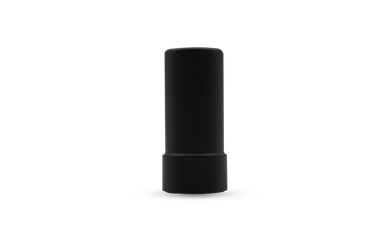
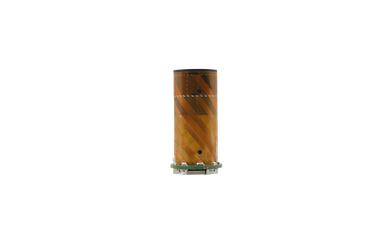
A helix antenna is made of a conductor wound into a helical shape above a ground plane. For GNSS applications, it is typically designed to operate in axial mode, producing a directional beam with circular polarization.
Because of its geometry, a helix antenna naturally generates RHCP signals without relying heavily on complex feed structures or substrate tuning.
Key Features of Helix Antennas
- Naturally RHCP
- High polarization purity
- Directional radiation pattern
- Strong suppression of multipath signals
- Suitable for wideband and multi-frequency GNSS
Helix antennas are commonly used in GNSS surveying, reference stations, marine navigation, aerospace systems, and other high-precision satellite applications.
What Is a Patch Antenna?
A patch antenna, also known as a microstrip antenna, consists of a flat metallic patch mounted on a dielectric substrate above a ground plane. It is popular due to its compact size and ease of integration. Circular polarization in a patch antenna is achieved through specific geometric modifications, such as truncated corners or dual-feed designs.
Key Features of Patch Antennas
- Low profile and compact
- Lightweight and easy to integrate
- Cost-efficient for many applications
- Narrower bandwidth compared to helix antennas
- More sensitive to ground plane and enclosure design
Patch antennas are widely used in consumer GNSS devices, vehicle navigation systems, trackers, and compact positioning terminals.
Helix Antenna vs Patch Antenna: Key Performance Differences
1. Polarization Performance
Helix antennas inherently produce RHCP signals that closely match GNSS satellite transmissions. This results in strong signal reception and reduced sensitivity to polarization mismatch.
Patch antennas can also generate RHCP, but polarization quality depends heavily on design precision and manufacturing consistency. Small variations in substrate or layout can affect performance.
2. Multipath Resistance
Multipath occurs when GNSS signals reflect off surfaces such as buildings, water, or the ground before reaching the antenna. These reflections can significantly degrade positioning accuracy.
Helix antennas, with their axial-mode radiation and directional characteristics, are much better at rejecting low-elevation reflected signals.
Patch antennas tend to receive more reflected energy, especially in environments with strong reflections.
3. Phase Center Stability
Phase center stability is critical for accurate GNSS positioning, particularly in applications such as RTK and high-precision surveying.
Helix antennas generally provide a more stable phase center over different frequencies and elevation angles. Patch antennas often exhibit greater phase center variation, which can introduce positioning errors.
4. Frequency Bandwidth and Multi-GNSS Support
Modern GNSS systems often operate across multiple frequency bands (L1, L2, L5, E1, E5, B1, B2).
Helix antennas are naturally wideband and well suited for multi-frequency GNSS reception.
Patch antennas can support multiple bands, but usually require more complex designs, which can increase sensitivity to manufacturing tolerances.
5. Size and Integration
Patch antennas are thin, lightweight, and easy to integrate into compact devices or enclosures. This makes them ideal for space-constrained designs.
Helix antennas typically require more vertical space and are more visible when mounted externally.
6. Cost Considerations
Patch antennas are generally less expensive to produce and are well suited for large-scale deployments where cost and size are primary concerns.
Helix antennas involve more material and mechanical structure, which can result in higher cost—but also higher performance.
Typical Application Scenarios
Helix Antennas Are Commonly Used In:
- GNSS surveying equipment
- Reference stations and base stations
- Marine and offshore navigation
- High-precision positioning systems
- Anti-interference and anti-jamming GNSS applications
Patch Antennas Are Commonly Used In:
- Consumer navigation devices
- Vehicle GNSS terminals
- Asset tracking devices
- Compact or embedded GNSS products
Choosing the Right Antenna for Your GNSS System
- Rather than asking which antenna is ''better'' in general, it is more useful to ask which antenna better matches the application:
- If compact size, low profile, and cost efficiency are the top priorities, a patch antenna is often sufficient.
- If accuracy, signal stability, multipath suppression, and multi-frequency performance are critical, a helix antenna is usually the better choice.
- This is why many professional and high-precision GNSS systems rely on helix antennas despite their larger size.
Harxon Helix Antennas: Proven Performance in Demanding GNSS Conditions
At Harxon, we specialize in helix antennas for GNSS and satellite applications, with a long-term focus on signal quality, stability, and real-world performance.
Our work with helix antenna designs has shown that they deliver reliable signal reception, stable phase center characteristics, and strong resistance to interference across a wide range of operating environments. These qualities are especially important in GNSS applications where accuracy and consistency cannot be compromised.
Based on our hands-on experience in GNSS systems, helix antennas consistently demonstrate clear advantages in challenging conditions, particularly in environments affected by multipath and reflected signals.
Conclusion
Both helix antennas and patch antennas have their place in GNSS and satellite systems.
Patch antennas are compact, cost-effective, and well suited for everyday positioning needs. Helix antennas, on the other hand, excel in accuracy, stability, and performance under challenging conditions.
As GNSS technology continues to evolve toward higher precision and multi-frequency operation, helix antennas remain a key solution for systems where performance truly matters.