With the rapid development of autonomous robots in agriculture, logistics, industrial inspection and engineering machinery, high-precision positioning has become a core capability. Traditional GNSS can hardly meet centimeter-level requirements, so selecting the right smart antenna is critical. This blog helps users choose the most suitable Harxon smart antenna for stable, precise robot positioning.
Why Smart Antenna Selection Matters for Robotics Applications
Choosing the right smart antenna is critical for autonomous robots, as it directly determines positioning precision, operation stability, and system integration efficiency. This section explains the core importance of proper selection from three key aspects.
Positioning Accuracy Directly Determines Robot Operational Performance
Positioning accuracy is essential for robot operations. Traditional GNSS systems only provide meter-level accuracy and cannot meet high-precision requirements. Harxon smart antennas integrate RTK and multi frequency GNSS technologies to achieve ±2–3 cm centimeter level positioning, fully supporting precise control in agriculture, logistics, and industrial inspection.
Signal Stability Ensures Continuous Operation and Safety
Signal stability guarantees safe and uninterrupted robot operation. Harxon smart antennas use multi-frequency, multi-constellation receiving designs to improve signal continuity, reduce signal loss in complex environments, and avoid positioning drift or operational interruptions.
Integration Level Affects Development Cycle and System Cost
Integration design significantly influences R&D efficiency and total cost. Traditional discrete solutions are complex and high-latency, while Harxon HX-ME series integrated smart antennas simplify the architecture, shorten development cycles, and reduce total system cost by 10%–20%, helping manufacturers enhance product competitiveness.
Key Factors to Consider When Choosing a Smart Antenna for Robots
Selecting a proper smart antenna requires focusing on core performance indicators that directly affect robot positioning and usability.
Positioning Accuracy and Solution Modes
Positioning accuracy is the primary consideration. Single-point and DGPS can only meet low-precision needs, while the RTK fixed solution is essential for autonomous robots. Harxon HX ME401A and HX ME402A support high-precision RTK calculation to satisfy most robotic applications.
Multi-Frequency and Multi-Constellation Support
Full support for GPS, GLONASS, Galileo, and BeiDou systems with multi-frequency reception effectively reduces ionospheric errors and improves signal stability. Harxon robot antennas maintain strong tracking capability even in semi-obstructed urban, factory, and field environments.
Anti-Multipath and Anti-Interference Performance
Optimized phase center calibration and rugged structural design effectively suppress multipath interference, keeping positioning errors within 10 cm. This ensures reliable and stable positioning even in metal‑dense industrial and construction environments with strong reflections.
Low SWaP (Size, Weight, and Power) Design
Lightweight and low-power design is vital for drones and small robots. Weighing less than 80g, Harxon HX ME402A minimizes payload impact while maintaining centimeter-level accuracy.
Interface Compatibility and Integration Architecture
Harxon smart antennas support standard interfaces for easy system docking. The HX ME407A integrates GNSS, RTK, 4G, LoRa, and MCU to provide an all-in-one positioning and communication solution.
Exploring Different Types of Smart Antennas for Robotics Applications
Harxon provides a complete product matrix to match diverse robot platform requirements.
Classified by Integration Level
Standalone smart antennas are designed for applications where the GNSS receiver and RTK module are separate from the antenna itself. These antennas offer high flexibility, as they allow the user to choose specific components that suit their needs.
Harxon’s HX-ME400 series is an example of a standalone antenna that provides excellent GNSS coverage and precision. It offers the flexibility to connect with various receivers and external systems, making it ideal for applications that require a modular approach, such as large-scale robot fleets with specialized control systems.
Integrated smart antennas from Harxon combine GNSS reception, RTK processing, and antenna functionality in a single compact, lightweight unit. This design reduces system complexity by eliminating the need for multiple components to work together. It also reduces the total size, weight, and power (SWaP) requirements, which is crucial for UAVs and compact mobile robots that need to optimize every gram of weight. Harxon’s HX-ME407A is a leading integrated antenna solution that combines RTK functionality, GNSS reception, and robust anti-interference design in a single device. It’s ideal for robotic applications where space and weight are at a premium, yet high-precision positioning and signal stability are still required.
For applications demanding simple deployment and low integration complexity, Harxon offers fully integrated solutions that combine more than antennas, GNSS and RTK. These all‑in‑one units integrate data communication, sensor interfaces and power management, enabling faster installation and lower total system cost. The HX-ME800 series from Harxon offers a fully integrated solution that includes GNSS, RTK, LoRa, and 4G communication capabilities all in one compact unit. This solution is ideal for industries such as logistics, agriculture, and construction, where real-time data transmission is required alongside high-precision positioning.
Integrated RTK Smart Antenna
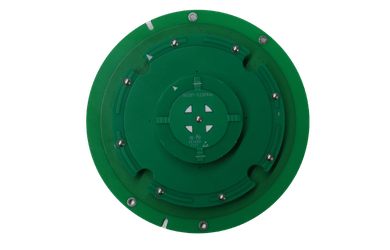
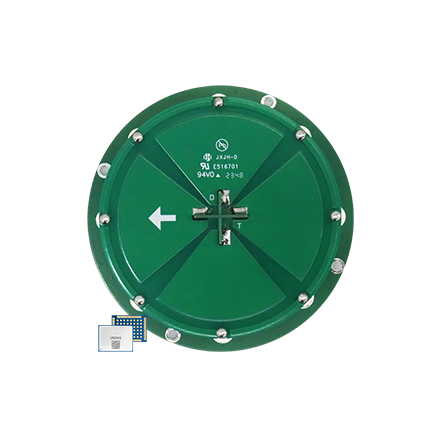
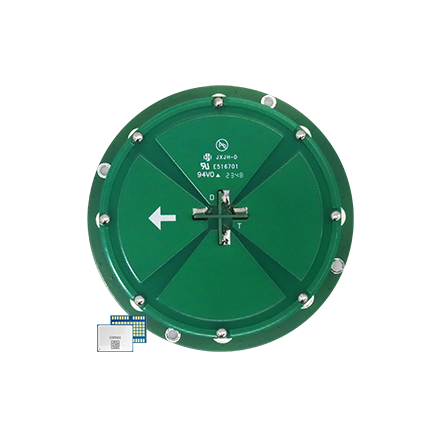
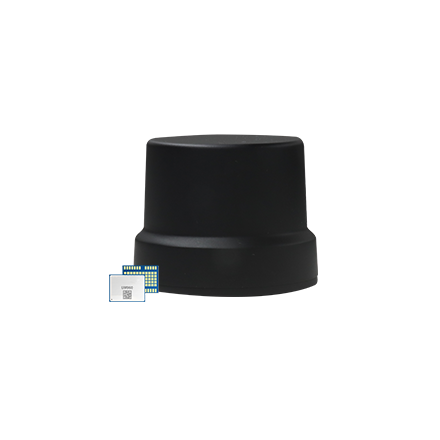
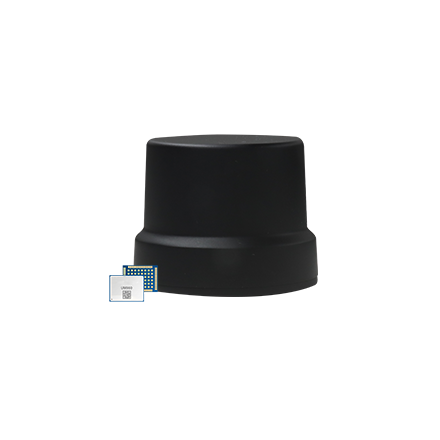
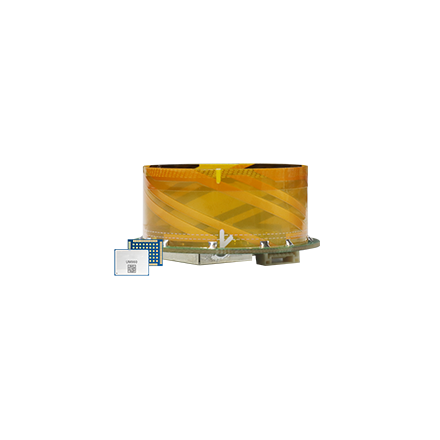
Represented by HX ME401A and HX ME402A, these products integrate high-performance helix antennas and RTK modules for compact, plug and play centimeter-level positioning.
All-in-One Multi-Function Smart Antenna
HX ME407A integrates positioning, communication, and control modules and is ideal for unmanned vehicles, engineering machinery, and self-built base station projects.
OEM GNSS Antenna
HX CSX231A and HX SE406A are standalone high-performance antennas suitable for users with existing receivers and cost-sensitive projects.
H3 Scenario-Adapted Antenna Types
For different robot platforms, targeted selection is recommended: lightweight HXME402A for drones and small robots; reliable HXME401A for agricultural and engineering machinery; all-in-one HXME407A for logistics AMRs; and cost-effective HXCSX231A for OEM projects.
Common Challenges in Smart Antenna Selection and Solutions
This section summarizes the most frequent challenges and targeted solutions for robot antenna selection.
Signal Obstruction and Multipath Interference
Complex environments cause signal loss and drift. Choose Harxon multi frequency, multi constellation antennas to improve stability in obstructed areas.
Strict Weight and Volume Limits
Heavy antennas reduce drone endurance. Select ultra-light HX ME402A (<80g) to minimize load impact.
High Integration Complexity
Discrete solutions lead to long development cycles. Use Harxon HX ME series integrated antennas to simplify system design.
Accuracy Loss from Improper Installation
Poor installation reduces accuracy by over 50%. Install antennas in open, non-obstructed positions and use Harxon standard mounting accessories.
Step-by-Step Guide to Select the Right Smart Antenna for Your Robot
Follow this standardized process to quickly identify the optimal Harxon smart antenna.
Clarify Scenarios and Accuracy Requirements
Define operating environment and precision needs. Centimeter-level tasks require Harxon HX ME series RTK-enabled antennas.
Match Antenna Type to Robot Platform
Drones and small robots → HX ME402A; agriculture & engineering → HX ME401A; logistics unmanned vehicles → HX ME407A; OEM projects → HX CSX231A.
Verify Key Parameters
Check RTK accuracy, multi-constellation support, weight, interface compatibility, and environmental protection level.
Standardized Installation and Debugging
Install at the top of the robot away from metal and interference; confirm stable RTK fixed solution and satellite signal.
On-Site Testing and Mass Selection
Conduct long-term verification in real working conditions, evaluate performance and cost, then finalize the model.
Conclusion
Choosing the right smart antenna is critical to achieving centimeter-level high-precision positioning, ensuring operational stability and improving system integration efficiency for autonomous robots. With multi-frequency, multi-constellation, anti-interference, lightweight and highly integrated designs, Harxon provides a full lineup of HXME series smart antennas that perfectly fit drones, agricultural machinery, logistics AMRs, industrial inspection robots and other scenarios. Choose Harxon now to empower your robot with stable, accurate and efficient positioning and upgrade your automated operations!