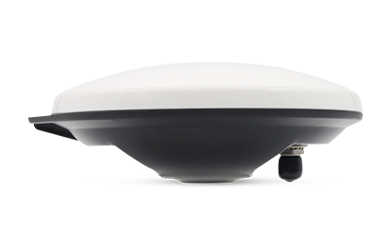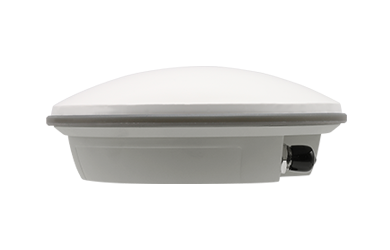
Global Navigation Satellite Systems (GNSS) play a critical role in positioning, navigation, and timing across industries such as land surveying, construction, agriculture, mapping, and autonomous systems. At the heart of any GNSS setup lies the antenna—an often underestimated component that can significantly influence accuracy, reliability, and overall system performance.
While many users are familiar with standard GNSS antennas commonly found in consumer devices, professional applications often require GNSS survey antennas designed specifically for high-precision positioning. Understanding the difference between these two antenna types is essential when accuracy, repeatability, and signal integrity matter.
This article provides a detailed comparison of GNSS survey antennas vs standard GNSS antennas, covering design principles, performance metrics, application scenarios, and selection considerations—helping professionals choose the right antenna for their positioning needs.
Understanding GNSS Antennas: A Brief Overview
A GNSS antenna receives satellite signals transmitted by constellations such as GPS, GLONASS, Galileo, BeiDou, and QZSS. These signals are extremely weak when they reach the Earth's surface, making antenna quality and design crucial.
Although both survey-grade and standard GNSS antennas serve the same basic purpose, they are engineered with very different performance goals:
-
Standard GNSS antennas prioritize compact size, low cost, and general positioning.
-
GNSS survey antennas focus on centimeter-level accuracy, phase stability, and resistance to signal distortions.
What Is a Standard GNSS Antenna?
Standard GNSS antennas are widely used in mass-market and light industrial applications, including:
-
Vehicle navigation systems
-
Smartphones and wearable devices
-
Asset tracking and fleet management
-
Consumer drones and IoT devices
Key Characteristics of Standard GNSS Antennas
-
Single or limited frequency support (e.g., L1 only)
-
Compact and lightweight form factor
-
Moderate gain and basic noise performance
-
Limited multipath suppression
-
Designed for meter-level accuracy
These antennas are well-suited for applications where approximate positioning is sufficient and cost or size constraints are a priority.
What Is a GNSS Survey Antenna?
GNSS survey antennas are engineered for professional positioning applications where precision and reliability are critical. They are commonly used in:
-
Land surveying and cadastral mapping
-
RTK and network RTK systems
-
Construction layout and machine control
-
Precision agriculture
-
Geodetic and reference station installations
Key Characteristics of GNSS Survey Antennas
-
Multi-band and multi-constellation support (L1/L2/L5, GPS, GLONASS, Galileo, BeiDou, etc.)
-
Highly stable phase center performance
-
Advanced multipath rejection
-
Higher gain and superior signal-to-noise ratio
-
Robust environmental protection
Survey antennas are designed to deliver centimeter-level or even millimeter-level accuracy when used with RTK or PPP correction services.
Core Differences Between GNSS Survey Antennas and Standard GNSS Antennas
1. Accuracy and Positioning Performance
The most significant difference lies in achievable accuracy.
-
Standard GNSS antennas typically deliver accuracy ranging from several meters to sub-meter under ideal conditions.
-
GNSS survey antennas, when paired with professional receivers and correction data, can achieve centimeter-level accuracy.
This performance gap is largely due to better phase center stability, cleaner signal reception, and reduced multipath effects in survey antennas.
2. Frequency Band Support
Frequency support directly affects accuracy, convergence time, and reliability.
-
Standard antennas often support single-frequency GNSS, limiting their ability to correct ionospheric errors.
-
Survey antennas support dual-band or multi-band GNSS, enabling faster ambiguity resolution and more stable RTK solutions.
Multi-band capability is especially important in challenging environments such as urban canyons or partially obstructed sites.
3. Phase Center Stability
Phase center variation (PCV) is a critical factor in high-precision GNSS.
-
Standard GNSS antennas exhibit larger and less predictable phase center variations, which introduce positioning errors.
-
GNSS survey antennas are designed with highly stable and calibrated phase centers, ensuring consistent measurements over time.
This stability is essential for surveying, deformation monitoring, and reference station applications.
4. Multipath Suppression
Multipath interference occurs when GNSS signals reflect off nearby objects before reaching the antenna.
-
Standard antennas offer limited protection against multipath.
-
Survey antennas often incorporate choke rings, advanced ground planes, or specialized antenna elements to suppress reflected signals.
Improved multipath rejection directly translates into higher accuracy, especially in complex environments.
5. Environmental Durability
Survey antennas are built for demanding field conditions:
-
Weather-resistant radomes
-
Extended operating temperature ranges
-
Protection against dust, moisture, and UV exposure
Standard GNSS antennas, in contrast, are typically designed for controlled or semi-controlled environments.
Application Scenarios: Which Antenna Fits Your Needs?
When a Standard GNSS Antenna Is Enough
-
Vehicle navigation and routing
-
Asset tracking and logistics
-
Consumer electronics
-
Basic GIS data collection
If meter-level accuracy meets your requirements, a standard GNSS antenna can be a cost-effective choice.
When You Need a GNSS Survey Antenna
-
Land surveying and boundary determination
-
Construction staking and machine guidance
-
Precision agriculture operations
-
RTK base stations and CORS networks
-
Scientific and geodetic measurements
In these cases, the antenna is not just a component—it is a performance enabler.
Selecting the Right GNSS Survey Antenna
When choosing a survey-grade antenna, professionals typically evaluate:
-
Supported GNSS constellations and frequency bands
-
Phase center calibration availability
-
Gain pattern and axial ratio
-
Multipath suppression design
-
Compatibility with existing GNSS receivers
Manufacturers such as Harxon focus on developing survey GNSS antennas that meet the needs of RTK, mapping, and high-precision positioning systems. In real-world deployments, users often prioritize antennas with proven performance consistency and broad system compatibility rather than purely theoretical specifications.
Cost Considerations: Is a Survey Antenna Worth It?
It is true that GNSS survey antennas are more expensive than standard GNSS antennas. However, in professional workflows:
-
Reduced rework and resurveying
-
Faster RTK initialization
-
More reliable results in difficult environments
often justify the higher upfront investment. For projects where accuracy errors translate into real financial or legal risks, antenna quality is not an area to compromise.
Future Trends in GNSS Antenna Technology
As GNSS systems continue to evolve, antenna technology is advancing in parallel:
-
Increased adoption of multi-frequency GNSS
-
Better integration with hybrid positioning systems
-
Improved performance in urban and obstructed environments
-
More compact survey-grade antenna designs
Survey antennas are increasingly expected to deliver high precision without sacrificing portability—an area where ongoing innovation is shaping next-generation solutions.
Conclusion
The difference between GNSS survey antennas and standard GNSS antennas is far more than price or size. It directly impacts positioning accuracy, reliability, and long-term measurement consistency.
-
Standard GNSS antennas are suitable for general navigation and low-accuracy applications.
-
GNSS survey antennas are purpose-built for professional, high-precision positioning where performance cannot be compromised.
For surveyors, engineers, and system integrators, selecting the right antenna is a strategic decision. By understanding the technical differences and aligning them with application requirements, professionals can ensure their GNSS systems deliver reliable and accurate results in the field.