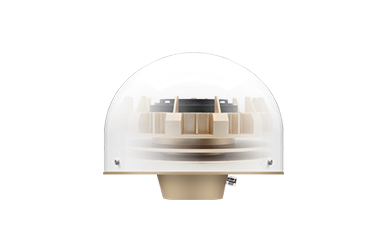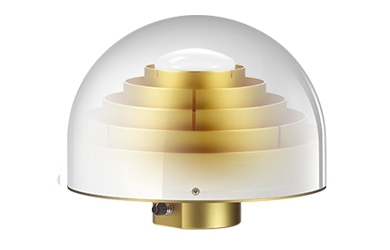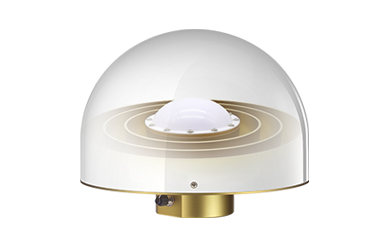
Choke ring antennas can solve the positioning errors of just a few millimeters. In high-precision GNSS applications, reflected satellite signals from buildings, metal structures, ground surfaces, or nearby obstacles can introduce positioning errors that standard antenna designs struggle to eliminate. The choke-ring antenna has long been regarded as the industry’s most effective solution for suppressing unwanted reflected signals, making it the preferred choice for mission-critical GNSS deployments worldwide.
What Is a Choke Ring Antenna?
A GNSS choke ring antenna is a highly specialized antenna engineered to receive satellite signals with exceptional accuracy while minimizing environmental interference. Unlike standard GNSS antennas designed primarily for general positioning applications, choke ring antennas are optimized for professional-grade measurements where precision, repeatability, and signal stability are non-negotiable. Designed specifically for professional positioning environments, they are widely used in geodetic observation, infrastructure monitoring, scientific research, and permanent reference station networks.
Choke Ring Antenna Design and Working Principle
Design
The term “choke ring” comes from its distinctive physical structure. Surrounding the antenna’s central receiving element is a carefully designed series of concentric conductive rings that serve as a passive filtering system. These rings are typically designed with depths close to one-quarter of the signal wavelength, allowing them to interact with incoming electromagnetic waves in a highly controlled manner.
The core purpose of this structure is multipath suppression. Because of this design, choke ring antennas have become the industry benchmark for applications requiring long-duration observations and highly stable measurement performance.
Working Principle
Direct satellite signals arrive from above at relatively high elevation angles and can reach the receiving element with minimal obstruction. Multipath signals behave differently. These unwanted reflected signals often bounce off nearby surfaces and arrive at the antenna from low elevation angles near the horizon.
When these reflected signals encounter the concentric choke rings, the ring structure acts as a waveguide system. The energy carried by low-angle horizontally polarized waves becomes trapped, dissipated, and effectively blocked before reaching the central antenna element. This passive design allows the antenna to significantly reduce interference without requiring active signal processing at the antenna level.
Types of Choke Ring Antennas
Although the basic operating principle remains consistent, choke ring antennas have evolved into several design variations to meet different deployment requirements.
Standard or Traditional Choke Ring Antennas
Traditional choke-ring antennas are a classic design widely used in permanent GNSS infrastructure. These antennas are typically large, relatively heavy, and built for long-term stationary installations. They are commonly found at permanent reference stations and in CORS networks, where the highest possible signal integrity is required.
3D Choke Ring Antennas
Unlike conventional designs, 3D choke ring antennas incorporate optimized three-dimensional structures that further improve signal reception efficiency across multiple satellite systems simultaneously. This design is particularly beneficial for tracking modern satellite constellations, including GPS, GLONASS, Galileo, and BeiDou. Advanced products such as the SA550 3D Choke Ring GNSS Antenna demonstrate how three-dimensional structural optimization can improve multipath rejection performance in increasingly complex signal environments.
Small or Low-Profile Choke Ring Antennas
While traditional choke-ring antennas provide exceptional performance, their physical size can be a limitation in certain deployment environments. To address this challenge, manufacturers have developed compact or low-profile choke ring antennas that maintain professional-grade multipath mitigation while reducing overall size and weight. Some designs incorporate ceramic choke structures that significantly reduce the antenna footprint without sacrificing critical performance characteristics.
Choke Ring Antenna vs Standard GNSS Antenna
The differences between choke-ring antennas and standard GNSS antennas become most apparent as positioning accuracy requirements increase.
Multipath Mitigation Capability
Standard GNSS antennas can provide reliable positioning for navigation, mapping, and general surveying applications, but they remain vulnerable to signal reflections from surrounding structures. In environments where centimeter or millimeter-level accuracy is required, this limitation becomes a major challenge.
Choke ring antennas approach this problem differently. Their concentric ring structure creates a passive defense mechanism that physically suppresses reflected low-angle signals before they can interfere with the primary satellite signal. This allows choke ring antennas to achieve a level of interference rejection that standard antenna designs cannot easily replicate.
Long-term Measurement Stability
Standard antennas can provide excellent short-term positioning performance, but professional applications such as geodetic monitoring require measurement consistency over many months or even years. Choke ring antennas are considered the industry gold standard because they maintain highly repeatable measurements over extended observation periods. This level of stability is essential in scientific and engineering applications where long-term positioning consistency directly impacts data reliability.
Portability
Standard GNSS antennas are generally lightweight, compact, and optimized for mobile applications such as UAV mapping, machine control systems, autonomous vehicles, and RTK rovers operating in dynamic environments.
Traditional choke ring antennas are much larger and heavier. Their design philosophy prioritizes signal integrity over mobility, making them far better suited for stationary, long-term installations.
Polarization Purity
GNSS satellites transmit circularly polarized signals, and professional choke-ring antennas are specifically designed to receive these clean, polarized signals while rejecting unwanted electromagnetic noise.
Cost
Standard geodetic antennas provide a cost-effective option for projects where moderate positioning errors remain acceptable. Choke ring antennas require a significantly higher investment due to their advanced engineering and specialized performance capabilities.
Core Applications in High-Precision GNSS
The most common application for choke ring antennas is permanent reference station infrastructure.
- CORS networks, formally known as Continuously Operating Reference Stations, rely on permanent GNSS stations that provide real-time correction data for high-precision positioning services. Since these stations operate continuously, maintaining stable long-term signal quality is critical. Choke-ring antennas provide the signal purity necessary for reliable generation of corrections.
- Geospatial surveying and mapping is another major application area. Surveying professionals working on national control networks, engineering construction projects, and land measurement operations require positioning systems capable of centimeter or millimeter-level accuracy. Standard antennas may perform adequately for general surveying, but professional geodetic work often requires the superior signal integrity of choke-ring antennas.
- Scientific and environmental research institutions also rely heavily on choke ring antenna technology. Researchers studying tectonic plate movement, atmospheric behavior, seismic activity, and long-term crustal deformation depend on extremely stable GNSS observations collected over extended periods. Even the smallest positioning inconsistency can compromise scientific analysis, making signal quality a top priority.
- Infrastructure monitoring has become another rapidly growing application. Large-scale engineering structures such as bridges, dams, tunnels, railways, and high-rise buildings increasingly use GNSS-based deformation monitoring systems to detect subtle structural movement.
Because these systems often monitor displacement at millimeter-level resolution, multipath suppression is essential to maintain measurement reliability. Manufacturers such as Harxon continue to develop specialized choke-ring antenna solutions designed specifically for these demanding, high-precision applications.
Frequently Asked Questions About GNSS Choke Ring Antennas
Why are choke ring antennas better than standard GNSS antennas?
Their primary advantage is superior multipath suppression. The concentric ring structure physically blocks reflected signals that standard antennas cannot effectively reject, thereby improving positioning accuracy.
Are choke ring antennas necessary for RTK surveying?
Not always. Standard survey antennas can perform well for conventional RTK operations, but choke ring antennas become valuable when maximum positioning precision and long-term stability are required.
What is the difference between 3D choke ring antennas and compact choke ring antennas?
3D choke ring antennas prioritize advanced multipath rejection and improved multi-constellation reception, while compact choke ring antennas focus on balancing professional-grade performance with easier deployment.
Can choke ring antennas support multiple satellite systems?
Yes. Modern professional choke ring antennas typically support simultaneous reception of GPS, Galileo, GLONASS, BeiDou, and other global satellite constellations.
Which industries commonly use choke ring GNSS antennas?
The most common industries include geodetic surveying, permanent reference station networks, scientific research institutions, infrastructure monitoring systems, and environmental observation projects.
Conclusion
Whether deployed as traditional choke ring antennas, advanced 3D designs, or compact, low-profile models, choke ring antennas remain among the most effective solutions for preserving GNSS signal purity in demanding environments. For organizations operating mission-critical positioning infrastructure, selecting professionally engineered hardware matters just as much as choosing the right measurement system. Manufacturers such as Harxon continue advancing antenna technology with high-gain, low-noise GNSS solutions built for the world’s most demanding positioning applications.