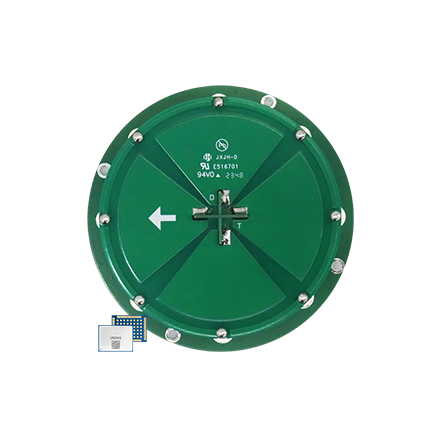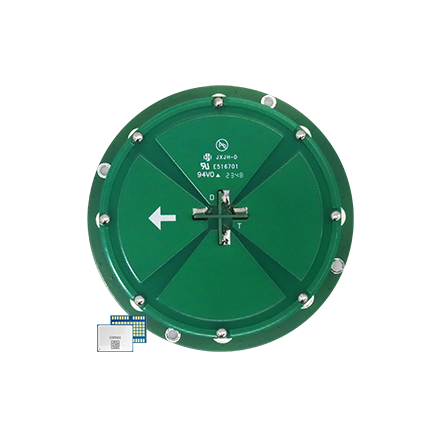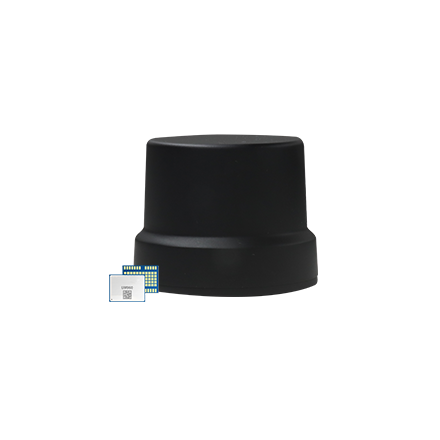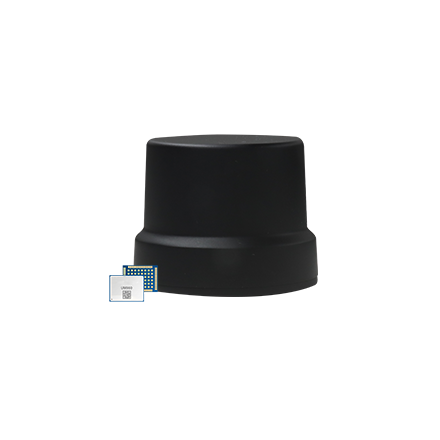
With the widespread adoption of autonomous robots in applications such as agricultural automation, unmanned delivery, and industrial inspections, positioning systems are evolving from being merely usable to being reliable. Traditional GNSS systems typically have errors of 1-3 meters in complex environments and sometimes exceed 5 meters, making it difficult to meet high-precision control requirements. Against this backdrop, smart antennas for autonomous robots have become critical infrastructure by integrating RTK and multi-frequency GNSS capabilities to achieve centimeter-level positioning.
In this context, the smart antenna for autonomous robots is emerging as a key solution. By integrating GNSS and RTK technologies, a high-precision smart antenna enables centimeter-level positioning while improving system reliability, reducing integration complexity, and supporting consistent performance in demanding real-world scenarios.
The Systemic Transition of high- precision smart antenna: from Positioning to Control
In autonomous robotic systems, positioning capability not only determines knowing where one is, but also directly affects the ability to execute precise control. The evolution from traditional GNSS to high-precision smart antennas essentially represents an upgrade from coarse positioning to control-grade positioning.
Performance Bottlenecks of Traditional GNSS in Robotics
In standard GNSS systems, even under ideal conditions, positioning accuracy is typically only ±1-3 meters. In practical applications, multipath effects, signal obstruction, and dynamic errors further amplify this inaccuracy. For example, in urban or industrial environments, signal reflections can increase errors by 30% to 70%; in agricultural fields or industrial parks, trees and equipment structures can reduce satellite visibility; and during movement, positioning update delays can cause path drift.
These issues directly impact the performance of robots. In agricultural scenarios, an error of just 20 centimeters can misalign crop rows; in warehousing and logistics, errors exceeding 50 centimeters can affect path planning and scheduling efficiency. Therefore, relying solely on traditional GNSS is no longer sufficient to meet the high-precision positioning requirements of autonomous robots.
System-Level Solution for High-Precision Smart Antennas
The high-precision smart antenna achieves a performance leap through three layers of technical capabilities. First, RTK differential technology improves positioning accuracy from the meter level to ±2-3 centimeters, enabling high-repeatability path control; Second, multi-frequency, multi-constellation GNSS increases the number of satellites and signal stability; and finally, antenna-level anti-interference design effectively suppresses multipath errors.
From a system architecture perspective, traditional solutions consist of a GNSS antenna, receiver, and RTK module, resulting in a complex structure and latency issues. In contrast, smart antennas utilize an integrated design that combines GNSS reception, RTK processing, and the antenna into a single device, significantly reducing system complexity and improving real-time performance.
Key Technologies and Engineering Performance of High-Precision Smart Antennas
The performance of high-precision smart antennas is not determined by a single technology, but rather by the synergistic interaction of multiple core capabilities. From positioning accuracy and signal stability to system integration capabilities, each technology directly influences the final engineering performance. This section will break down the technical implementation logic across key dimensions, including RTK, multi-frequency GNSS, anti-interference design, and low SWaP.
Click here to understand what a smart antenna is.
RTK Technology: The Core of Centimeter-Level Positioning
RTK is the foundation of high-precision positioning. Without RTK, GNSS errors typically range from 1 to 3 meters, and can reach 3 to 5 meters in complex environments. With RTK, positioning accuracy can be improved to ±2-3 centimeters in a fixed solution state and to approximately ±10 centimeters in a floating solution state.
This capability enables robots to achieve path repeatability and closed-loop control, serving as a key prerequisite for automated operations. For example, in autonomous agricultural machinery or robotic mapping, centimeter-level accuracy directly determines the quality of the work.
Multi-Frequency, Multi-Constellation GNSS: Enhancing Stability and Continuity
Modern smart antennas support GPS, GLONASS, Galileo, and BeiDou systems and feature multi-frequency reception capabilities. Multi-frequency technology effectively reduces ionospheric errors, while multi-constellation support significantly increases the number of visible satellites.
In semi-obstructed environments, multi-frequency solutions can reduce the probability of signal loss from over 30% to less than 10%, thereby significantly improving positioning continuity. This is particularly important for robotic systems operating in complex environments.
Multipath and Interference Resistance Design
Multipath effects are a major factor affecting GNSS accuracy. In areas with dense metal structures or buildings, unoptimized antennas may introduce errors of 1–2 meters. By optimizing the phase center and structural design, high-performance multipath-resistant antennas can limit errors to within 10 centimeters.
This capability determines the system’s usability in real-world environments and is a key prerequisite for industrial-grade robot deployment.
Low SWaP Design and System Integration Capabilities
For UAVs and mobile robots, size, weight, and power consumption directly impact system performance. Every 100-gram increase in device weight can reduce endurance by 3% to 8%, while increased power consumption creates additional thermal management challenges.
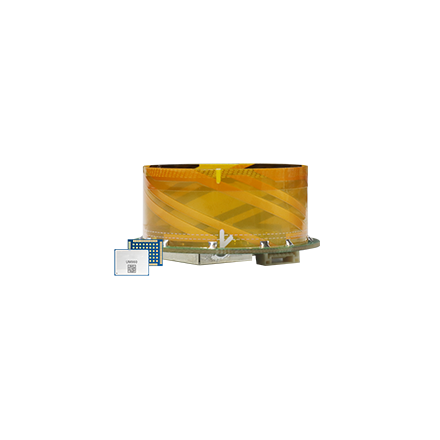
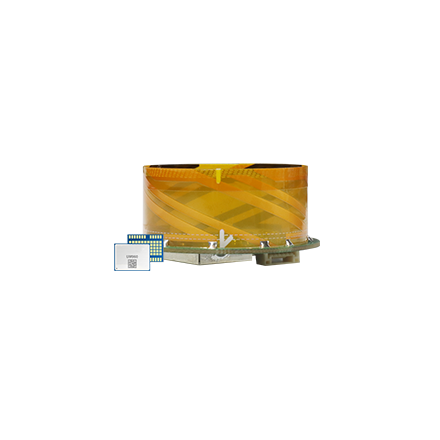
Harxon smart antenna for UAV/Robot employs a low SWaP design to achieve a compact structure and low-power operation, optimizing platform payload and endurance while ensuring performance.
Engineering Applications for Smart Antennas for Autonomous Robots in Typical Scenarios
The value of high-precision smart antennas is ultimately demonstrated in specific application scenarios. Different industries have varying requirements for positioning accuracy, stability, and environmental adaptability. This section will analyze their actual engineering performance and application benefits based on four typical scenarios: agriculture, drones, ground robots, and industrial environments.
Precision Agriculture: High-Precision Path Control
In agricultural automation, path accuracy directly impacts operational efficiency. By deploying high-precision smart antennas, path errors can be controlled within ±3 centimeters, thereby reducing agricultural input waste by 10% to 15% and improving operational consistency.
UAV Mapping and Inspection
In UAV applications, positioning accuracy determines the quality of mapping data. Traditional GNSS errors can cause map distortion, whereas smart antennas with integrated RTK significantly improve mapping accuracy while reducing post-processing workload.
Unmanned Ground Vehicles (UGVs) and Warehouse Robots
In logistics and industrial park scenarios, positioning drift can lead to path deviations. Using GNSS smart antennas can improve navigation stability by over 20%, reducing the need for path corrections and minimizing system errors.

Mining and Construction Equipment Automation
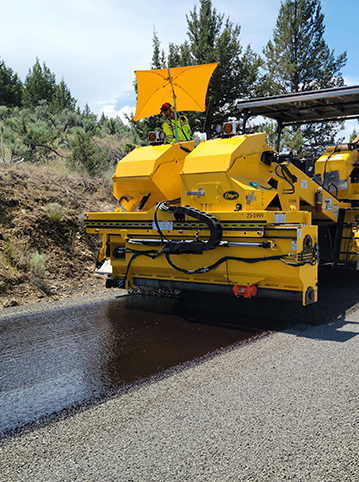
In high-vibration, high-dust environments, equipment demands extremely high reliability from positioning systems. Industrial-grade smart antennas, with their robust structures and enhanced interference resistance, can operate continuously and reliably in harsh environments, reducing the risk of equipment downtime.
Guide to Selecting and Deploying High-Precision Smart Antennas
For OEMs and system integrators, high-precision smart antennas are critical components that directly determine positioning system performance. This section offers practical engineering guidance covering type selection, frequency matching, installation deployment, and gain configuration to ensure reliable, high-precision operation.
Matching Accuracy Requirements & Antenna Type Selection
Different applications require differentiated precision capabilities. For autonomous robots, surveying, and precision agriculture, prioritize GNSS high-precision smart antennas supporting RTK to achieve centimeter-level positioning. Select standard-precision or high-precision antenna types based on scenario needs, matching positioning accuracy to task objectives.
Frequency Band Matching & Signal Compatibility
Full-frequency coverage is essential for stable positioning. Choose smart antennas supporting GPS, GLONASS, Galileo, BeiDou, QZSS, IRNSS/NavIC, SBAS, and L-Band to enhance anti-interference and continuity. Matching frequency bands to constellation requirements ensures reliable signal reception in complex environments.
Installation Deployment & Environmental Optimization
Installation methods and environment directly affect performance. Avoid obstructed areas and metal structures; select unobstructed, low-interference locations. Use Harxon’s adaptable mounting solutions to maintain signal quality—poor installation can reduce positioning accuracy by up to 50%.
Amplifier Gain Configuration & System Integration
Configure the appropriate LNA (low-noise amplifier) gain to amplify signals and ensure link quality. Integrated high-precision smart antennas simplify the system architecture: GNSS signals are fed into the antenna, and RTK-corrected data are output to the robot control system, delivering low latency and high stability.
Cost-Performance Balance
Integrated smart antennas reduce reliance on external modules and lower system complexity. While initial investment is higher, integrated solutions typically cut total system cost by 10%–20% in engineering projects, achieving optimal cost-performance.
Conclusion
As autonomous robots evolve toward higher precision and larger-scale deployment, positioning systems have evolved from auxiliary modules into core capabilities. By integrating GNSS, RTK, and anti-interference technologies, smart antennas for autonomous robots achieve a leap in accuracy from the meter to the centimeter level, not only enhancing positioning performance but also significantly simplifying system architecture.
For original equipment manufacturers and system integrators, selecting the right high-precision smart antenna is not merely about improving accuracy; it is a critical step toward optimizing development cycles, reducing system complexity, and enhancing product competitiveness. Integrated solutions, such as the Harxon Smart Antenna for UAV/Robot, strike a balance between low SWaP design and industrial-grade reliability, capable of meeting high-precision positioning requirements across multiple scenarios.
If you are evaluating positioning solutions for autonomous robots or seeking to optimize the performance of your existing systems, we recommend further exploring the specific performance characteristics and selection strategies of smart antennas across various application scenarios.