Applications such as land surveying, machine control, precision agriculture, and autonomous navigation increasingly rely on continuously operating reference station networks that deliver highly stable correction data with centimeter- or even millimeter-level accuracy. At the center of this ecosystem is the GNSS CORS (Continuously Operating Reference Stations) network. Unlike standalone GNSS receivers that independently calculate position, CORS networks continuously collect satellite observation data from fixed stations and distribute correction information to rovers operating across large geographic coverage areas.
Pain Point: What Drives CORS Network Failure?
CORS infrastructure is fundamentally different from mobile GNSS applications because reference stations are expected to operate continuously for years without interruption. While temporary signal degradation may be acceptable for mobile positioning applications, reference stations serve as the foundation of downstream correction services, so even relatively minor infrastructure issues can have network-wide consequences.
Persistent Threat of Multipath
Reference stations are not always deployed in ideal open-sky environments, and operators are frequently forced to install systems on urban rooftops, telecom towers, industrial facilities, or transportation infrastructure where reflective surfaces significantly increase multipath interference. Even advanced receivers cannot fully compensate when signal contamination begins before processing.
Burden of Traditional Infrastructure
Legacy choke ring antennas are often large, heavy, and mechanically demanding. Their bulky structure requires reinforced mounting systems, specialized installation procedures, and infrastructure capable of handling long-term environmental stress. In exposed installations such as rooftops or communication towers, the large antenna profile generates significant wind loads, creating an often-overlooked mechanical risk.
Installation & Stability Challenges
Small physical movement can become a major problem. If the antenna mounting structure shifts due to wind pressure, vibration, or environmental stress, the antenna reference point may move slightly, causing station coordinates to drift. For permanent reference stations, coordinate consistency is critical; if the reference point changes unexpectedly, the correction data immediately becomes unreliable, potentially triggering a serious CORS network failure.
Downtime Creates Network-Wide Service Interruptions
The operational consequences extend far beyond a single installation. One unstable reference station can interrupt correction service delivery across an entire RTK network, causing survey teams operating far from the station to experience failed RTK initialization, degraded positioning accuracy, unexpected drift, or loss of fixed solutions.
Solution: Rethinking the CORS Antenna
As global positioning infrastructure expands, the design requirements for reference station antennas are rapidly evolving. Traditional geodetic installations were often placed in carefully selected open environments, but modern deployment conditions increasingly look very different.
Modern CORS Networks Demand More Flexible Infrastructure
CORS operators commonly install reference stations on communication towers, dense urban rooftops, transportation infrastructure, utility facilities, and remote monitoring installations, where structural limitations pose a serious engineering concern. These environments require antenna systems that maintain geodetic-grade signal quality while reducing installation complexity and minimizing long-term mechanical stress.
This shift has created demand for a new generation of CORS antenna design. An ideal GNSS antenna for CORS stations must maintain professional-grade multipath suppression while simultaneously reducing weight, aerodynamic drag, and structural load placed on mounting systems.
Rise of Compact Designs
Mini choke ring antennas are increasingly emerging as the logical solution. Unlike traditional large-choke-ring structures, compact designs aim to preserve high-level signal purity while significantly improving installation flexibility. Reducing antenna weight directly lowers wind resistance, decreases structural stress, and improves long-term installation stability without sacrificing positioning performance.
Standard survey antennas may appear attractive because of their smaller form factor, but they generally cannot provide the phase center stability and multipath suppression performance required for permanent reference station environments where accuracy must remain stable over years of continuous operation.
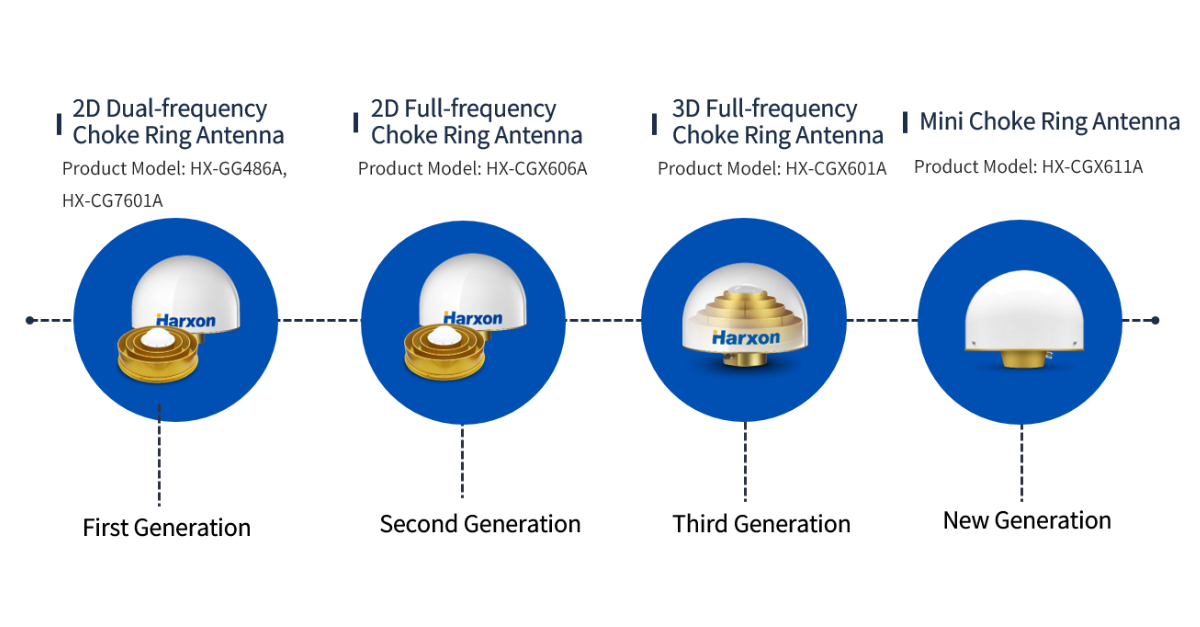
Harxon’s Breakthrough: 3D and Mini Choke Ring Solutions
As a specialized GNSS positioning technology manufacturer, Harxon has focused heavily on developing antenna architectures specifically engineered for the demands of permanent reference station infrastructure.
Rather than following conventional choke-ring design principles, Harxon has developed advanced, compact choke-ring antenna technologies that combine professional-grade signal-suppression performance with significantly improved mechanical efficiency.
Key Innovation: 3D Choke-ring Antenna
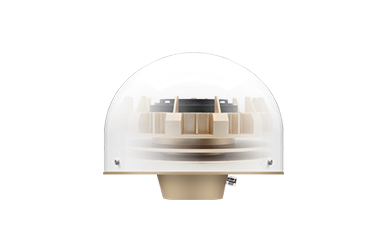
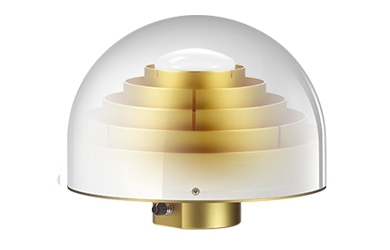
Unlike traditional choke-ring antennas that rely primarily on conventional horizontal ring structures, Harxon’s 3D choke-ring antenna architecture integrates both horizontal and vertical choke-slot technology, fundamentally changing how unwanted signals interact with the antenna.
The horizontal choke slots are specifically designed to suppress multipath signals arriving from below the antenna structure, particularly reflected interference affecting the L1 and L2 frequency bands, which are widely used in high-precision positioning systems. At the same time, the vertical choke slots inhibit surface-wave propagation across the antenna structure while improving signal-tracking performance at lower satellite elevation angles, where signal geometry becomes increasingly sensitive to interference.
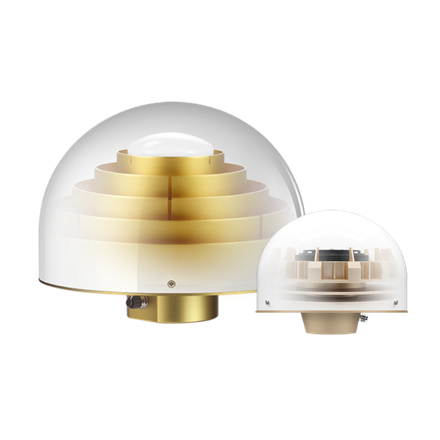
Cost-effectivity: Mini Choke-ring Antenna
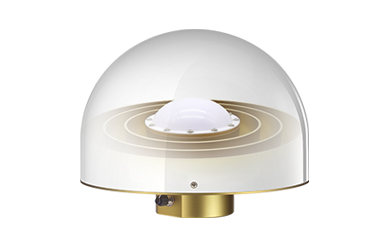
Harxon has pushed miniaturization even further with its compact choke-ring design strategy. The HX-CGX611A demonstrates how advanced choke ring engineering can dramatically reduce antenna size and weight without sacrificing geodetic-grade positioning performance.
The value of miniaturization extends beyond portability. Lower antenna mass reduces wind resistance, minimizes long-term structural vibration, decreases mounting stress, and improves mechanical stability for permanent installations expected to operate continuously for years. This directly addresses one of the most overlooked causes of long-term network instability in modern CORS deployments.
Uncompromised Performance for RTK CORS Networks
For permanent reference station infrastructure, one of the most critical performance factors is long-term coordinate consistency because stations often operate continuously for many years, and even small measurement inconsistencies can gradually degrade correction reliability across the network.
Stable Phase Center
This makes phase center stability one of the most important technical indicators. Phase center behavior determines the consistency of the antenna’s electrical reference point during continuous satellite tracking, and excessive variation introduces subtle measurement instability that directly affects the quality of long-term correction data.
Harxon’s compact choke-ring antenna architecture has been engineered to minimize these effects. Compared with major competing products in the professional GNSS antenna market, the HX-CGX611A demonstrates extremely small Phase Center Offset values in the horizontal plane while maintaining highly optimized overall Phase Center Variation performance.
Excellent Low-elevation Satellite Tracking
Low-elevation satellite tracking performance has become equally important in modern GNSS positioning. Multi-constellation positioning systems increasingly rely on signals from GPS, GLONASS, Galileo, and BeiDou satellites distributed across complex orbital geometries, and satellites operating near the horizon frequently contribute valuable observation diversity despite being more vulnerable to interference.
Harxon’s vertical choke slot architecture directly improves performance under these conditions. Better low-elevation tracking improves observation geometry, allowing the station to generate more stable correction models for connected rover devices operating throughout the wider RTK network.
Support Wideband Reception
Modern CORS network RTK services increasingly rely on simultaneous multi-frequency observations across multiple satellite constellations, and Harxon’s advanced antenna architecture supports wideband reception, making it well-suited to modern GNSS infrastructure and increasingly sophisticated correction algorithms.
Frequently Asked Questions About CORS Antennas
Why do CORS stations use choke ring antennas?
Choke ring antennas reduce multipath interference and improve signal stability, making them ideal for permanent reference stations that require highly consistent long-term positioning performance.
What causes CORS network failure?
Common causes include unstable antenna mounting structures, coordinate shifts due to environmental stress, multipath interference, poor installation conditions, receiver configuration errors, and infrastructure downtime.
Can standard GNSS antennas replace choke ring antennas in CORS networks?
Standard GNSS antennas perform well for general positioning applications, but permanent reference station networks typically require the superior signal integrity and phase-center stability provided by choke-ring antennas.
Why is antenna weight important in permanent GNSS infrastructure?
Heavy antennas generate greater wind load and mechanical stress, increasing the risk of long-term structural instability that can directly affect coordinate consistency.
Why are compact choke ring antennas becoming more popular?
They preserve professional-grade multipath suppression while reducing size, wind resistance, installation flexibility, and infrastructure deployment complexity.
Conclusion
Building a reliable GNSS CORS network requires far more than selecting an advanced receiver or deploying sophisticated RTK correction software. Long-term positioning stability depends equally on antenna design, installation stability, signal quality management, and the ability to maintain uninterrupted correction consistency across the entire network. Harxon’s advanced 3D and mini choke ring antenna solutions represent the next stage of antenna evolution by combining the multipath-rejection performance traditionally associated with large choke ring antennas with a compact, lightweight design optimized for modern deployment conditions. The result is a new generation of CORS antenna technology built specifically for long-term, fail-safe, high-precision reference station infrastructure.