
In industries where reliable communication is critical such as precision agriculture, UAV operations, and construction positioning. Maintaining stable, long-distance data transmission can be a major challenge.
While cellular networks and Wi-Fi are widely used, they often depend on external infrastructure and may suffer from latency, signal loss, or limited coverage in remote areas.
This is where a radio modem becomes essential.
An industrial radio modem enables direct, infrastructure-free wireless communication by transmitting data over licensed or unlicensed frequencies such as UHF radio, offering a more reliable and low-latency alternative to conventional networks. As a type of wireless radio modem, it is widely used in mission-critical applications where stability and real-time performance are non-negotiable.
This article explores what a radio modem is, how it works, and why it remains a key technology for long-range industrial communication.
A radio modem is a communication device that transmits and receives data over radio frequencies by converting digital signals into radio waves. As a form of wireless data radio, it enables seamless data exchange between remote systems without the need for cables or cellular infrastructure.
Unlike conventional communication technologies, a radio modem is specifically designed for long-range and stable transmission. In industrial scenarios, an industrial radio modem is built to withstand harsh environments while ensuring consistent performance and secure communication.
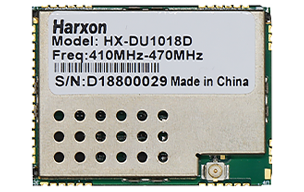
The core objective of the Radio Modem is to enable long-range data transmission while maintaining minimal delay.
In RTK (Real-Time Kinematic) positioning applications, it serves as a communication bridge between the base station and the mobile station, rapidly transmitting critical real-time correction data to end devices such as unmanned aerial vehicles, agricultural machinery, or surveying instruments.
The process typically involves data input, signal modulation, wireless transmission, and signal decoding. Thanks to the use of UHF radio frequencies, radio modems can achieve long-distance communication with low latency and high reliability.
A radio modem operates through four key steps:
Data input from external devices
Signal modulation into radio frequency
Wireless transmission via antenna
Signal demodulation at the receiver
At a technical level, the core of a radio modem lies in the processes of modulation and demodulation. On the transmitting side, digital data from external devices is first encoded and then modulated onto a carrier signal using techniques.
The signal is then amplified and transmitted via antenna over designated frequency bands, typically UHF radio. Frequencies in the UHF range (generally 300–1000 MHz) offer strong diffraction and penetration capabilities, allowing signals to propagate effectively across uneven terrain or partially obstructed environments.
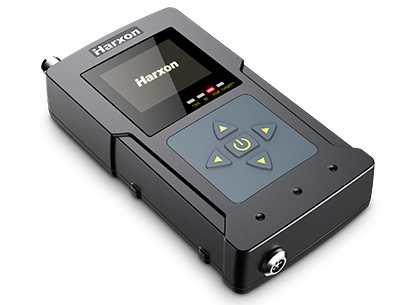
On the receiving side, the process is reversed: the signal is captured, filtered, demodulated, and reconstructed into usable data. Advanced wireless data radio systems often incorporate forward error correction (FEC) and automatic repeat request (ARQ) mechanisms to ensure data integrity.
This is why an industrial radio modem can maintain stable communication even under low signal-to-noise conditions.
Compared to communication methods that rely on public networks, the advantages of an industrial radio modem extend beyond independence, they lie in full control over the communication link.
Industrial radio modems enable long-range data transmission while maintaining minimal latency. This is critical for applications requiring real-time kinematic (RTK) positioning such as drone missions or autonomous agricultural machinery, ensuring real-time data synchronization.
In complex electromagnetic interference environments, ordinary devices may lose signals, whereas professional RF oscillators enhance reception of target signals and reject interference, ensuring continuous and normal signal operation.
Industrial application environments are typically harsh, and such devices are designed for extremely high reliability and excellent stability.
They can withstand impacts, moisture, mechanical vibrations, and shocks common on construction sites, providing stable data support for millimeter-level positioning accuracy.
Modern industrial RF oscillators are typically characterized by compact size and low power consumption. This miniaturized design facilitates integration into space-constrained devices such as small robots or handheld terminals, while low power consumption ensures long battery life during outdoor operations.
Despite the technical complexity, the devices typically offer straightforward operating procedures, reducing the costs associated with on-site deployment and maintenance.
These advantages make radio modems the preferred solution for mission-critical communication scenarios.
In industries where communication stability and real-time performance are critical, a radio modem serves as a foundational component of the entire system. As a mature wireless data radio technology, it plays a vital role across diverse sectors.
In GNSS surveying and RTK positioning, a radio modem is essential for transmitting correction data from the base station to rover units, enabling centimeter-level accuracy required for engineering surveying and topographic mapping.
Because RTK performance depends on continuous data flow, any delay or interruption can immediately degrade positioning accuracy and reduce operational efficiency. By establishing a direct point-to-point link, a radio modem ensures real-time data transmission without relying on unstable network infrastructure.
Operating on UHF radio frequencies, it provides reliable long-range communication in complex field environments, making it a fundamental component for high-precision surveying applications.
In precision agriculture, a radio modem delivers RTK correction data to agricultural machinery, enabling automated guidance and high-accuracy field operations.
Since farm environments often lack reliable connectivity, network-based solutions can lead to interruptions, reduced accuracy, and inefficient operations. A wireless data radio solves this by creating an independent communication link with wide-area coverage using UHF radio, ensuring continuous and stable data transmission across the field.
By supporting reliable positioning and uninterrupted connectivity, an industrial radio modem helps improve operational efficiency and plays a key role in advancing smarter, more automated farming systems.
For UAV operations, the communication link is directly linked to data transmission and flight safety. Real-time telemetry and control signals must be delivered with minimal latency to ensure stable flight and accurate mission execution. Unlike cellular-based solutions, which can introduce unpredictable delays, radio modems provide a deterministic communication path with millisecond-level response times.
In construction and engineering applications, a radio modem is used to distribute GNSS correction data from a base station to multiple machines and survey equipment, supporting tasks such as machine control, site positioning, and topographic measurement.
These applications require consistent positioning accuracy across all devices on site. If communication is unstable or delayed, it can lead to misalignment, rework, and reduced construction efficiency. Unlike network-dependent solutions, a radio modem ensures a stable and synchronized data link, allowing multiple systems to operate with the same high-precision reference.
Operating on UHF radio frequencies, it provides reliable communication even in environments with obstructions or limited infrastructure. In this scenario, an industrial radio modem serves as a core component that enables coordinated operations, improves construction accuracy, and reduces project risks.
The following table summarizes key specifications and functional characteristics of representative radio modem models.
Model | Product Type | Frequency Band | Transmit Power | Data Rate | Receiver Sensitivity | Modulation | Operation Mode | Interface | Key Features |
HX-DU1018D | Embedded Module | 410–470 MHz | 0.5 W / 1 W | 4.8–19.2 kbps | ≈ -117 dBm | GMSK / FSK | Half-duplex | SMT / IPEX | Ultra-compact size, low power consumption, ideal for OEM integration |
HX-DU1021D | Embedded Module | 863–870 / 902–928 MHz | 25–100 mW | 9.6–19.2 kbps | ≈ -119 dBm | GMSK / FSK | Half-duplex | SMT / IPEX | ISM band support, strong anti-interference, adaptive communication |
HX-DU1601D | External Radio | 410–470 MHz | 0.5–1 W | 9.6 / 19.2 kbps | ≈ -115 dBm | GMSK / FSK | Half-duplex | RS232 / LEMO / TNC | Industrial-grade design, IP67 protection, long-range communication |
HX-DU8616D | High-power Base Station Radio | 410–470 MHz | 5 W / 22 W / 35 W | 4.8–19.2 kbps | ≈ -114 dBm | GMSK / FSK | Half-duplex / Repeater | LEMO / TNC | Ultra-long range, repeater support, ideal for RTK base stations |
HX-DU1603D | External Radio | 410–470 MHz | ≈ 1 W | 9.6–19.2 kbps | ≈ -115 dBm | GMSK / FSK | Half-duplex | RS232 / Bluetooth | Bluetooth connectivity, flexible deployment |
HX-DU2005D | Industrial Radio | 840–845 MHz / 902–928 MHz | Switchable power (0.5 W / 2 W) | 230.4 kbps | ≈ -107 / -115 dBm | GMSK / FSK | Half-duplex | IPEX | Multi-application support (agriculture, UAV, surveying), stable long-range communication |
The table above highlights the key specifications of different radio modem models, covering both embedded modules and high-power external radios. These devices are designed to balance communication range, power consumption, and reliability across various application scenarios.
In general, higher transmit power enables longer communication distance, while better receiver sensitivity improves performance in weak signal environments. Most models operate on UHF radio frequencies, which provide a strong balance between coverage and signal penetration. In addition, the use of GMSK/FSK modulation and half-duplex communication ensures stable and efficient data transmission in industrial environments.
These characteristics make wireless data radio solutions well-suited for applications that require reliable, long-range, and low-latency communication. Understanding these specifications provides a foundation for evaluating how radio modems perform in different real-world applications.
A radio modem plays a fundamental role in enabling reliable wireless communication across a wide range of applications. By converting digital data into radio signals and transmitting them over long distances, it provides a stable and low-latency communication link that is essential for modern industrial and field operations.
With technologies such as UHF radio, advanced modulation methods, and robust industrial design, today’s wireless data radio solutions can maintain consistent performance even in challenging environments.
If you are exploring reliable communication solutions for RTK, UAV, or industrial systems, Harxon offers a range of high-performance radio modems built for stability, long-range transmission, and real-world deployment.


