
Global Navigation Satellite System (GNSS) performance depends heavily on the quality and design of the antenna receiving the signal. Whether used for surveying, precision agriculture, autonomous vehicles, UAV mapping, or industrial IoT tracking, the GNSS antenna is the first component determining positioning accuracy, signal stability, and multipath resistance. Because different applications require different levels of precision, gain, size, and polarization, GNSS antennas have evolved into several major categories—each with unique advantages and trade-offs.
This article provides a clear, engineering-oriented explanation of the four most widely used GNSS antenna types: microstrip, helical, dipole-based, and array antennas. We also explore how they perform in real-world environments and where each type is typically used.

Microstrip GNSS antennas—often called patch antennas—are among the most commonly used structures in modern positioning systems. They consist of a flat metallic patch printed on a dielectric substrate, which allows them to be compact, lightweight, and easy to integrate into devices.
Microstrip antennas are widely used for GPS L1, multi-frequency GNSS, UAV navigation, handheld receivers, IoT asset tracking, and smart devices. Their simple PCB-friendly design makes them ideal for high-volume manufacturing and embedded applications.
A microstrip antenna resonates at specific GNSS frequencies (such as L1/L2/L5 or B1/B2/B3), producing right-hand circular polarization (RHCP), which is essential for receiving satellite signals efficiently.
Compact, lightweight form factor suitable for drones, handheld GNSS devices, and IoT asset trackers.
Low manufacturing cost with easy PCB integration, making it ideal for large-scale industrial deployment.
Stable phase center and good multi-band compatibility (L1/L2/L5).
May exhibit lower gain compared with larger antenna structures.
Performance can be more affected by nearby metal, enclosure materials, and installation surface.
UAV flight control systems
Smart farming equipment
Asset tracking devices
Automotive GNSS modules
Consumer GPS products

Helical GNSS antennas use a spiral or 3D helical structure to receive RHCP signals with excellent multipath suppression. These antennas are known for delivering high precision, strong signal stability, and superior axial ratio performance.
Because of their robust performance, helical antennas are widely used in surveying equipment, geodetic receivers, precision agriculture, RTK rover/base systems, and professional mapping instruments.
The 3D helix provides natural circular polarization and a broad beamwidth, improving reception of low-elevation satellites and reducing the impact of reflected signals—particularly valuable in environments with buildings, trees, or machinery.
Excellent axial ratio and circular polarization, ideal for precise surveying and geodetic applications.
Naturally strong multipath suppression and stable performance in challenging environments.
Larger physical size compared with microstrip antennas.
Higher manufacturing cost and more complex tuning requirements.
Surveying GNSS receivers
RTK base/rover stations
Drone mapping payloads
Precision agriculture guidance systems
Marine positioning
Dipole-based antennas are widely used across communication technologies, but variations of dipole structures are also applied in GNSS reception, especially in products requiring wide radiation patterns and compact designs.
Although not typically used for high-precision surveying, dipole GNSS antennas offer consistent performance in portable receivers, vehicle navigation, IoT modules, and telematics systems.
Dipole designs use two symmetrical conductive elements to create a balanced radiation pattern. With proper matching and ground-plane design, dipole-based GNSS antennas can deliver stable gain and wide coverage.
Wide radiation pattern suitable for portable devices, vehicles, and telematics terminals.
Excellent electrical balance and low distortion for stable GNSS signal reception.
Gain and efficiency heavily depend on installation environment and ground-plane design.
Usually not the first choice for high-precision surveying.
Vehicle GNSS antennas
IoT tracking devices
Telemetry systems
Consumer navigation devices
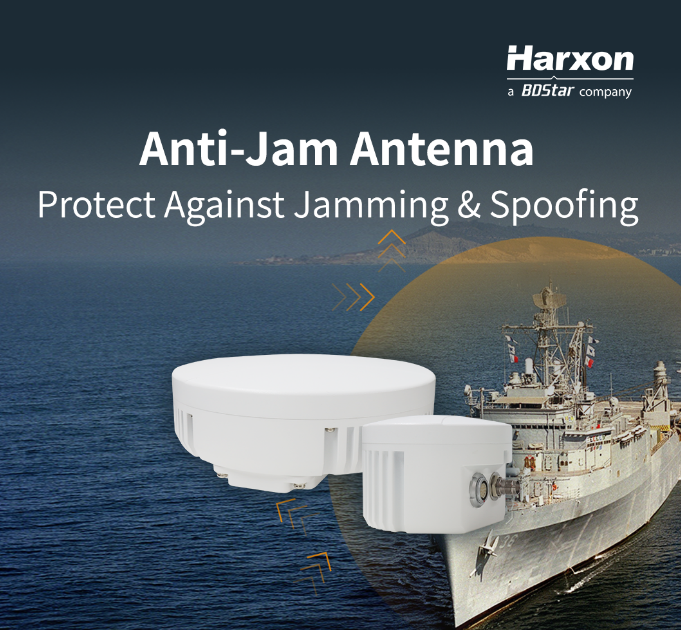
GNSS array antennas combine multiple radiating elements to achieve higher gain, controlled beam patterns, and even anti-jamming capabilities. These antennas represent the high end of GNSS antenna engineering and are used in demanding environments that require robust, mission-critical performance.
An array can steer its beam electronically, filter interference, and enhance specific satellite signals. With multiple synchronized elements, array antennas deliver exceptional accuracy, reliability, and signal stability.
High gain and beam-forming capability, ideal for advanced GNSS receivers and anti-jamming systems.
Enables multi-constellation, multi-frequency performance with enhanced signal reliability.
Higher cost and more complex design.
Requires additional signal processing modules to operate effectively.
Autonomous vehicles
Military GNSS systems
High-precision timing
Interference-resistant applications
Surveying base stations requiring superior stability
The best GNSS antenna depends on your precision requirements, environment, device size, and budget:
Use microstrip antennas when you need a compact, cost-effective solution for consumer, IoT, or embedded systems.
Choose helical antennas for high-precision surveying, geodesy, UAV mapping, or environments with significant multipath.
Select dipole-based antennas for mobile or compact devices where wide coverage is important.
Consider array antennas when you must maximize accuracy and interference resistance.
At Harxon, we design and manufacture advanced GNSS antennas that meet the demands of modern positioning applications. Our multi-frequency GNSS antennas, high-precision surveying antennas, and helical solutions are widely used in surveying, agriculture, mapping, and UAV systems.
We focus on optimizing phase-center stability, integrating low-noise amplification, and enhancing multipath suppression, all while ensuring our antennas withstand harsh environmental conditions. By combining innovative engineering with rigorous testing, we provide reliable GNSS performance that our customers can trust in real-world scenarios.
As GNSS technology expands into autonomous systems, precision agriculture, robotics, surveying, and IoT, understanding antenna types becomes increasingly important. Microstrip, helical, dipole-based, and array antennas each offer distinct advantages depending on the balance between size, precision, durability, and cost.
By choosing the right antenna structure—and working with experienced manufacturers capable of advanced engineering—organizations can achieve far more accurate and reliable GNSS performance across diverse environments and applications.


